
Why Ilkal Sarees Are a Pride of Karnataka
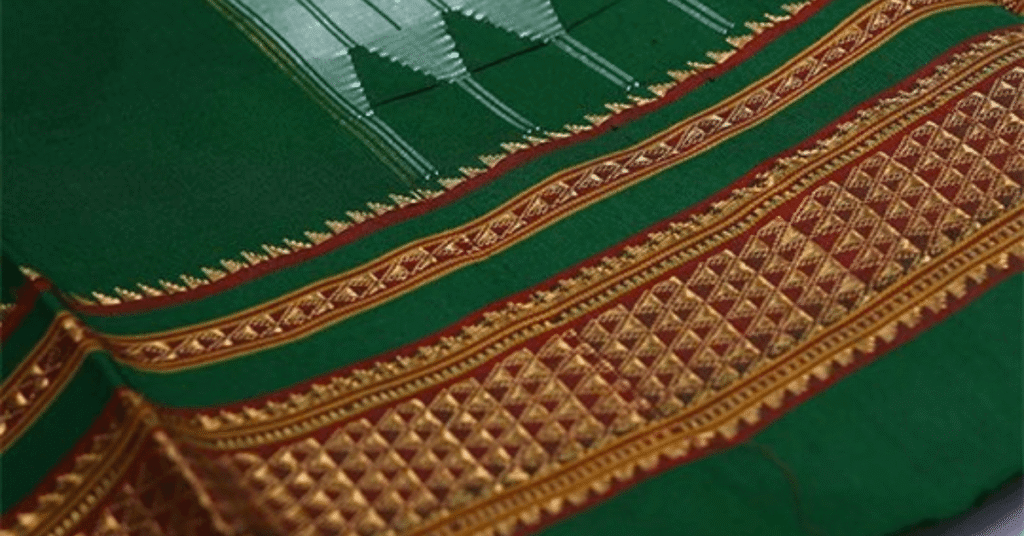
Some sarees are bought for a wedding. Some are picked up for a festival. And then there are sarees that carry an entire region’s identity in their threads. The Ilkal saree belongs firmly in that last group. Woven in and around the small town of Ilkal in Karnataka’s Bagalkot district, it has been draped by generations of Kannada women, and it continues to turn heads at temples, offices, family functions and weddings across India.
But what makes this handloom a matter of state pride rather than just another regional weave? The answer lies in a rare weaving technique, a colour palette rooted in local tradition, a long documented history, and the families who keep the looms alive. In this article, we look at why the Ilkal saree deserves its place among Karnataka’s most treasured textiles, and why it deserves a place in your wardrobe too. If you would like to see these sarees for yourself as you read, you can explore the Ilkal saree collection at Ilkal Pride.
A Weaving Tradition Older Than the Records
Ilkal is a modest town in the south-eastern corner of Bagalkot district, set in a valley in North Karnataka. Local tradition holds that weaving here began as far back as the 8th century, and the craft is believed to have grown under the patronage of regional chieftains who valued fine textiles. Early history like this is difficult to document, but the written record is clear from the nineteenth century. The Gazetteer of the Bombay Presidency, published in 1884, noted that 684 looms were already working in Ilkal in 1883.
Few crafts survive changing rulers, textile mills and cheap synthetic fabric. Ilkal weaving did, and today the tradition extends across weaving centres in several districts of Karnataka. Every saree that leaves a loom is a small piece of that unbroken story.
Tope Teni: A Technique You Will Find Nowhere Else
If there is one reason Ilkal is celebrated by textile lovers, it is the Tope Teni technique. Most sarees are woven as one continuous fabric. An Ilkal saree is different. The body and the pallu are prepared from separate sets of warp threads and woven separately. They are then joined with a series of interlocking loops so that the two parts become one seamless piece of cloth.
This join is not decoration. It is the structural heart of the saree, and it is also its signature, because the loops are visible on the reverse side. Turn a genuine Ilkal saree over and you will see the looped connection where the body meets the pallu. It is the easiest way to tell a handwoven piece from a machine-made imitation. Weavers regard it as the core of their craft, and it takes years of practice to master, because tension, timing and alignment all have to be right.
A second distinctive feature is the Kondi technique, in which the solid-coloured border is woven using three shuttles. The result is a border that is bold, crisp and firmly locked into the body of the saree.
Colours and Motifs That Speak Kannada Culture
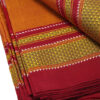
Ilkal sarees are recognisable from across a room. The traditional palette leans on pomegranate red, peacock green and parrot green, and the red pallu in particular has become iconic. For brides, a shade known as Girikumkum, associated with the kumkum worn by married women in the region, has long been considered auspicious.
The design vocabulary comes straight from the world around the weaver:
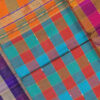
- The body is kept understated, with stripes, checks or plain fields, so that the border and pallu can shine.
- The border is broad, usually four to six inches wide, in a contrasting colour. Popular styles include Gomi, Chikki Paras and Gayatri.
- The pallu is often woven in red silk with white patterns, featuring temple towers, chariots, lotuses, elephants, palanquins and conch shells.
Together these elements create a saree that feels grand without being loud. It reflects the temple architecture, fields and festivals of the region, which is why an Ilkal draped over a shoulder immediately says “Karnataka.”
Recognised With a GI Tag
Ilkal sarees carry a Geographical Indication (GI) tag, the same kind of recognition given to Mysore silk and Kanchipuram silk. A GI tag tells buyers that a product’s qualities come from a particular place and its traditional methods. For Ilkal, it is meant to protect the name from being casually borrowed by copies that mimic the look but not the craft, and it strengthens the position of weavers who work in the authentic way.
Comfort That Suits Real Life
Beauty alone would not have kept the Ilkal saree popular for so long. It is also practical. A typical Ilkal combines a cotton or art silk body with a pure silk pallu and border, which gives a lightweight, breathable cloth that drapes with a little body and stays comfortable in Karnataka’s warm climate. That is why the same saree works for a long day at the office, a family function or a festival like Dasara. Pure silk versions are also woven for grander occasions.
Ilkal sarees are traditionally made in lengths of six, eight and nine yards, so they suit both the everyday drape and older, more traditional styles of wearing a saree. Well made, it also lasts, and many families pass their Ilkal sarees from mother to daughter.
Livelihoods Woven Into Every Saree
Behind every saree is a household for whom weaving is both a livelihood and an inheritance. Weavers work on traditional pit looms fitted with dobby or jacquard attachments, and a single saree can take anywhere from three to seven days to complete, depending on the design. Preparing yarn, dyeing, setting up the warp, weaving and finishing often involve several pairs of hands.
Handloom work is demanding, and younger generations now have many other career options. When you choose a genuine handloom saree, you are paying for real skill and giving weavers a reason to continue. Keeping the looms busy keeps the craft alive.
Why Ilkal Belongs in Your Wardrobe Today
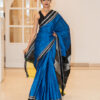
The Ilkal saree is not a museum piece. It is a living garment that fits modern life. Its lightweight fabric works for the office, and its bold borders and pallus suit festivals, weddings and pujas. Paired with a contrasting blouse and simple jewellery, it looks elegant without effort.
If you are new to Ilkal, start with a classic red-pallu saree in a colour combination you love, and build from there. You can browse authentic Ilkal sarees online at Ilkal Pride and choose from traditional and contemporary colourways. Look closely at the border, the pallu and the reverse side, and you will begin to appreciate the craft as much as the colour.
A Pride Worth Carrying Forward
The Ilkal saree is proof that a craft can be old and relevant at the same time. Its Tope Teni join, its temple-inspired motifs, its GI recognition and its comfortable fabric all point to the same truth: this is a weave with real substance behind its beauty. It is a pride of Karnataka because it belongs to Karnataka, in its history, its colours and its people.
Whether it is your first handloom or your fiftieth, an Ilkal saree connects you to that story. For an easy place to begin, visit Ilkal Pride and find the Ilkal that speaks to you.
Free shipping
on Orders Over ₹2000Secure Payment
100% risk-free shoppingSpecial Campaigns
Guaranteed SavingCustomer Service
Give us feedbackAbout Styler
At ILKAL’S PRIDE, you will witness the legacy of manufacturing the famous Ilkal sarees from generations to generations.
Quick Links
- tel: +91-9108142048
- -
- e-mail: info@ilkalpride.com
- Designed By Digisnare Technologies.