
The Rich History of Ilkal Sarees
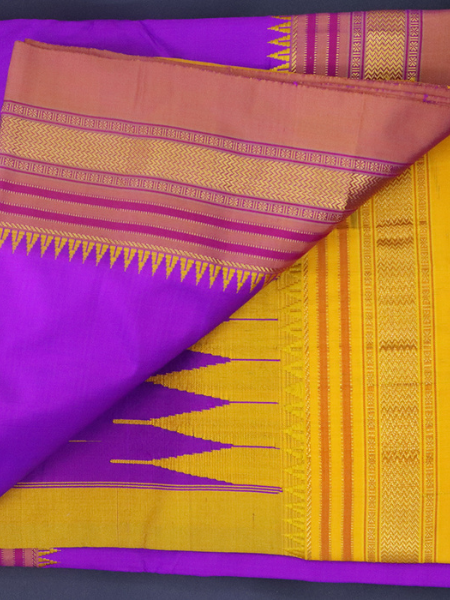
Nestled in the Bagalkot district of Karnataka, the town of Ilkal has for centuries been synonymous with a singular art form—a saree weaving tradition whose beauty lies not just in its vibrant colours and striking contrast, but in its history, culture, and craftsmanship. The Ilkal saree, or Ilkal seere, is much more than a garment—it is a living thread that weaves together time, artistry, identity, and community.
Origins and Early History
- Ancient weaving centre: Ilkal’s weaving tradition is very old. Weavers have traced it back to around the 8th century AD.
- Patronage & geography: The craft flourished under local chieftains in and around Bagalkot and Bellary, encouraged by the availability of raw materials (cotton especially) and by trade routes connecting the Deccan plateau.
- Name & place: The saree takes its name from Ilkal, a town that has long been a hub of handloom weaving. The identity of the craft is deeply tied to this place.
The Unique Weaving Techniques & Design Elements
- Warp-joining: Tope-Teni
One of the hallmark features of Ilkal sarees is the Tope Teni technique: the body warp (threads that run lengthwise) and the pallu warp are woven separately and then joined by a series of loops. This looped joining is unique to Ilkal and contributes to the characteristic finish of the saree
- Materials & colour play
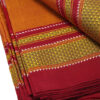
The body of the saree is often cotton (for comfort, breathability), while the borders/pallu may use art silk or pure silk depending on quality and cost. The traditional colours—deep reds (maroon/pomegranate red), peacock green, parrot green and similar rich tones—create strong contrast especially between body, border, and pallu.
- Border types & motifs
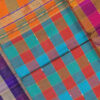
Ilkal sarees are distinguished by their borders, which come in several styles: Chikki Paras, Gomi (also known as Ilkal dadi), Jari, Gaadi-dadi, and newer ones like Gayathri. The motifs on body or pallu can include geometric shapes (stripes, checks, rectangles), natural-inspired motifs (like lotuses, elephants), temple tower designs (“seragu”), mountain ranges (rampa), etc.
- Length & drape
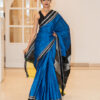
Ilkal sarees are made in different lengths—commonly 6 yards, 8 yards, 9 yards—depending on use (everyday wear, ceremonial, etc.). The pallu is often of a generous size (16-27 inches in many cases) with bold design so that its temple motifs are clearly visible.
Cultural Significance & Spread
Role in festivals and rituals
The bold contrast of red/white or red/maroon in pallu/border, and temple motifs, often lend the saree a ceremonial aura. For special occasions, bridal wear, religious rituals etc., certain colour combinations (for example Giri Kumukum, associated with sindoor, etc.) are preferred.Weaver communities & craft transmission
Many weaver families specialise in Ilkal weaving; the craft is passed down through generations. It remains a household / community enterprise in many cases.GI status & recognition
Ilkal sarees have Geographic Indication (GI) status, helping protect the uniqueness of the craft and giving recognition to its origin.
Why Ilkal Sarees Endure
- Versatility and comfort: Cotton bodies make them suitable for daily wear in warm climates; silk or art silk in pallu and borders lend elegance for special occasions.
- Visual identity: The contrast border + pallu, striking motifs, and regional significance make Ilkals immediately recognisable.
- Cultural pride & heritage: For communities in North Karnataka, the saree is not just a textile; it carries with it tradition, identity, memory.
Free shipping
on Orders Over ₹2000Secure Payment
100% risk-free shoppingSpecial Campaigns
Guaranteed SavingCustomer Service
Give us feedbackAbout Styler
At ILKAL’S PRIDE, you will witness the legacy of manufacturing the famous Ilkal sarees from generations to generations.
Quick Links
- tel: +91-9108142048
- -
- e-mail: info@ilkalpride.com
- Designed By Digisnare Technologies.