
10 Things to Check Before Buying an Ilkal Saree Online
Buying a handloom saree online is convenient, but it comes with one big question: will it look and feel like what you saw on screen? With a saree as distinctive as the Ilkal, the answer depends on knowing what to look for. Genuine Ilkal sarees have specific features that are easy to spot once you know them, and easy to miss when you are scrolling quickly.
This checklist covers the ten most important things to verify before you place an order. Keep it handy the next time you shop, whether you are browsing Ilkal sarees at Ilkal Pride or comparing options elsewhere.
1. Confirm the Tope Teni Join
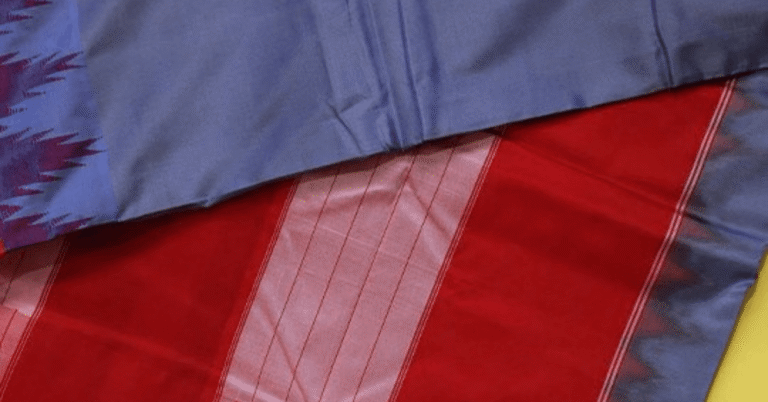
The single most reliable sign of an authentic Ilkal is the Tope Teni technique, in which the body and the pallu are woven separately and joined with interlocking loops. This join is visible on the reverse side of the saree, where the pallu meets the body. Ask the seller for a photo of the back. If you see a smooth machine-stitched line or a fully continuous fabric with no loops, be cautious.
2. Check the Border Width and Style
A traditional Ilkal border is broad, usually four to six inches wide, and woven in a contrasting colour. The solid border is created with the Kondi technique using three shuttles, so it should look crisp and firmly woven, not printed or stitched on. Common styles include Gomi, Chikki Paras and Gayatri. If a listing shows a thin border that looks flat, ask questions before buying.
3. Study the Pallu Design
The pallu is where an Ilkal shows off. Traditionally it is woven in red silk with white patterns, and the motifs often include temple towers, chariots, lotuses, elephants and conch shells. Zoom in on the product photos. The motifs should look woven into the fabric, with clean edges, and not like a print sitting on top. Keep in mind that the pallu traditionally does not have the checks you see on the body.
4. Understand the Fabric Composition
Ilkal sarees are commonly made with a cotton or art silk body and a silk pallu and border, while some versions are woven entirely in silk. A good listing states this clearly. If the description says only “silk” or “cotton silk” with no further detail, ask the seller to specify each part. Knowing the composition helps you judge whether the price is fair and how to care for the saree.
5. Look at the Body Pattern
The body of an Ilkal is usually understated, featuring stripes, checks, small rectangles or a plain field. Another useful detail is colour logic: the border and pallu are typically woven in the same colour, while the body contrasts with them. If the colours look randomly mixed or the pattern seems uneven in the photos, it may be worth a closer look.
6. Compare Colours Realistically
Screens can make reds look deeper and greens look brighter than they are. Traditional Ilkal shades include pomegranate red, peacock green and parrot green, and bridal sarees use a shade called Girikumkum. Ask for photos in natural light, and read the colour name in the description. Whenever colour matters, such as for a wedding or matching a blouse, check whether the seller accepts returns for a colour mismatch.
7. Verify Authenticity Claims
Ilkal sarees carry a Geographical Indication (GI) tag, and many handloom products are associated with the India Handloom Brand. A trustworthy seller is happy to explain how they source their sarees and where they are woven. Be wary of vague claims such as “pure handloom” without any details. Transparent sellers give specifics: the weaving region, the fabric and the process. If you cannot find these details, send a message and see how the seller responds. A helpful, informed reply is a good sign.
8. Confirm Length and Blouse Piece
Ilkal sarees are traditionally made in six, eight and nine yard lengths, so check which one you are buying, especially if you prefer a particular style of draping. Also confirm whether a blouse piece is included, and look at its colour and fabric in the photos. A blouse piece that does not match well can spoil an otherwise great purchase, so it is worth asking.
9. Set Realistic Price Expectations
A handwoven Ilkal takes days to make, often three to seven depending on the design, and involves dyeing, warping and the delicate Tope Teni join. That effort is reflected in the price. Silk content, pallu work and border complexity all influence the cost. If a saree advertised as handloom is priced far below similar ones, ask why. Extremely low prices often signal power-loom production, printed designs or blended fabrics that are not disclosed.
That said, a higher price does not automatically mean better quality. Compare listings on the details above, not on price alone.
10. Read the Return, Care and Support Policies
Even careful shoppers occasionally receive something that does not meet expectations. Before you order, read the return and exchange policy and note the time window. Find out how the seller handles damage in transit or colour differences. Check whether care instructions are provided, since handloom sarees need gentle treatment. Finally, look for accessible customer support, such as a phone number, email or chat, and read customer reviews when available.
A Few Extra Tips for First-Time Buyers
If this is your first Ilkal, start with a classic combination, such as a red pallu with a contrasting body, before experimenting with unusual shades. Classic pieces show off the Tope Teni join, the broad border and the pallu motifs at their best, which makes them easier to evaluate and enjoy.
It also helps to save the product page or take screenshots of the listing. If the saree that arrives looks different from what was described, you will have a clear reference when speaking to the seller. And once your saree arrives, unpack it in good light and check it against this list straight away, while the return window is still open.
Quick Recap: Your Ilkal Buying Checklist
- Tope Teni loops visible on the reverse side
- Broad, firmly woven border of about four to six inches
- Woven pallu motifs, traditionally white on red silk
- Clear fabric composition for body, border and pallu
- Body pattern with stripes, checks or plain field
- Colours verified in natural-light photos
- Transparent authenticity information, including GI and handloom details
- Correct length and a clearly shown blouse piece
- A clear return policy, care guide and responsive support
Buy With Confidence
An Ilkal saree is an investment in craftsmanship, and a few minutes of checking can save you from disappointment. Once you know how to read the join, the border, the pallu and the fine print, online shopping becomes easier and much more enjoyable.
Ready to put this checklist to use? Browse the Ilkal saree collection at Ilkal Pride, look closely at each detail, and choose a saree that carries Karnataka’s weaving heritage into your wardrobe. For a deeper look at judging quality once a saree is in your hands, read our guide on how to identify a quality Ilkal saree.
Free shipping
on Orders Over ₹2000Secure Payment
100% risk-free shoppingSpecial Campaigns
Guaranteed SavingCustomer Service
Give us feedbackAbout Styler
At ILKAL’S PRIDE, you will witness the legacy of manufacturing the famous Ilkal sarees from generations to generations.
Quick Links
- tel: +91-9108142048
- -
- e-mail: info@ilkalpride.com
- Designed By Digisnare Technologies.